


AI Is Already in Daily Life
Children meet AI every day in social media recommendations, predictive text, gaming bots and face recognition. Training helps them move from simply consuming algorithms to understanding and controlling them.
Blog
AI training for school students is no longer a nice extra. Artificial Intelligence (AI) now helps write code, draft essays, pick the videos we watch and even support doctors. That is why many experts now see AI literacy as a basic skill for every child, sitting right next to reading, writing and maths.
This guide is for parents, teachers and curious students. You will see what children learn at each age, which skills AI builds, the global and Indian frameworks schools follow, the best free tools, and how schools can teach AI safely. We finish with what AI training looks like in Hyderabad.

By Rupendra

Published 18 August 2026

Updated 25 September 2026

10 min read
Quick AI Training Overview

Best for
Grades K–12 (primary, middle and high school)

Covers
Curriculum, core skills, safety and classroom ideas

Frameworks
UNESCO, CBSE, OECD–EC AILit, ISTE+ASCD, EU

Tools
Teachable Machine, Scratch, Code.org and more (free)
Updated
September 2026
Key takeaways

AI literacy is becoming a core skill, just like reading, writing and maths.
Learning grows with age: unplugged games in primary, no-code machine learning in middle school, Python and ethics in high school.
CBSE is rolling out a Computational Thinking & AI curriculum for Classes 3–8 from the 2026–27 session.
Students do not need advanced coding or costly software; many great AI tools are free and run in a browser.
Safe AI training puts student data privacy, trained teachers and ethics first.
Not long ago, being good with computers meant typing fast, browsing the web and making a slide show. AI literacy goes one step deeper. It means understanding how AI models use data, spot patterns, make predictions and create new content, while also knowing where they go wrong and where they can be unfair (this unfairness is called bias).
A simple way to picture AI literacy is as a four-level stack. Children start at the bottom and climb up as they grow.

Level 1, Engage safely: digital safety and protecting your personal data.
Level 2, Understand and evaluate: spotting patterns and checking AI for bias.
Level 3, Create and solve: writing good prompts and building with no-code AI tools.
Level 4, Shape and innovate: AI ethics and designing AI systems.
Children meet AI every day in social media recommendations, predictive text, gaming bots and face recognition. Training helps them move from simply consuming algorithms to understanding and controlling them.

Global labour reports list machine learning, data science and AI systems among the top emerging jobs. Early exposure builds strong computational thinking for whatever career a child chooses.

Leaning on AI for every answer can weaken reasoning and problem-solving. Good training teaches children to use AI as a thinking partner, not a shortcut that skips the hard thinking.

Learning about deepfakes (fake videos or photos made by AI), algorithmic bias, copyright and data privacy helps students stay safe and act fairly online.

Ask your child where they noticed AI today; it is a quick way to start a great conversation.
Teaching AI to a 7-year-old looks very different from teaching a 16-year-old. Global frameworks such as the UNESCO AI Competency Framework for Students and the AI Literacy (AILit) Framework from the OECD and the European Commission follow an age-phased path. Each stage matches what children are ready for, both in how they think and in their technical skills.
Here is how that path looks across the three school stages.

Grades K–5
No heavy coding and no hard jargon. Children explore logic, patterns and simple cause and effect through play.

Grades 6–8
Students learn the difference between rule-based coding (If/Then logic) and machine learning, where computers learn from data to make predictions.

Grades 9–12
Teens dig into how modern AI is built, the maths behind it and its impact on society.
Stage
Main focus areas
Primary (Grades K–5)
Pattern recognition, unplugged logic, tech safety and privacy
Middle (Grades 6–8)
Rule-based coding vs machine learning, prompt engineering, algorithmic bias
High School (Grades 9–12)
Python and data science, neural networks and NLP, AI ethics, law and governance
If your child is in primary school, start with unplugged games at home before any screen-based AI tools.
Good AI education builds big life skills, sometimes called meta-skills, that help children far beyond the computer lab. These four stand out.
Students learn decomposition, which means breaking a big problem into smaller parts they can solve one by one. This is the heart of designing algorithms.

Students see how raw data is collected, cleaned, organised and turned into numbers a model can use. They learn a golden rule: bad data in means bad predictions out.
Students stop accepting AI answers at face value. They check sources, verify facts and look for hallucinations, which are confident-sounding answers the AI simply made up.

Prompting is clear communication with a structured system. Students practise being clear, giving background context, improving prompts step by step and testing them carefully.
Education bodies around the world are adding AI to school learning. They want students to stay competitive and safe in a digital world. Here are the key frameworks parents and schools should know.
In India, the change is already happening in classrooms. CBSE is rolling out a Computational Thinking & AI curriculum for Classes 3–8 from the 2026–27 session, guided by the National Curriculum Framework for School Education (NCF-SE).
Organisation
Framework
Core objectives
UNESCO
AI Competency Framework for Students
Universal access, ethical governance, student data safety and human rights-centred development
ISTE+ASCD (USA)
ISTE Standards for Students
Computational thinking, creative design with AI and digital citizenship
India (CBSE/NCF-SE)
Computational Thinking & AI curriculum under NCF-SE
AI and computational thinking for Classes 3–8, rolling out from the 2026–27 session
OECD & European Commission
AI Literacy (AILit) Framework, supported by Code.org; final version June 2026
19 competences across four domains: Engage with AI, Create with AI, Manage AI and Shape AI
European Union
Digital Education Action Plan
Ethical guidelines for teachers, digital literacy and data protection under GDPR
If your child studies in a CBSE school in Classes 3–8, ask the school how it plans to deliver the new Computational Thinking & AI curriculum.
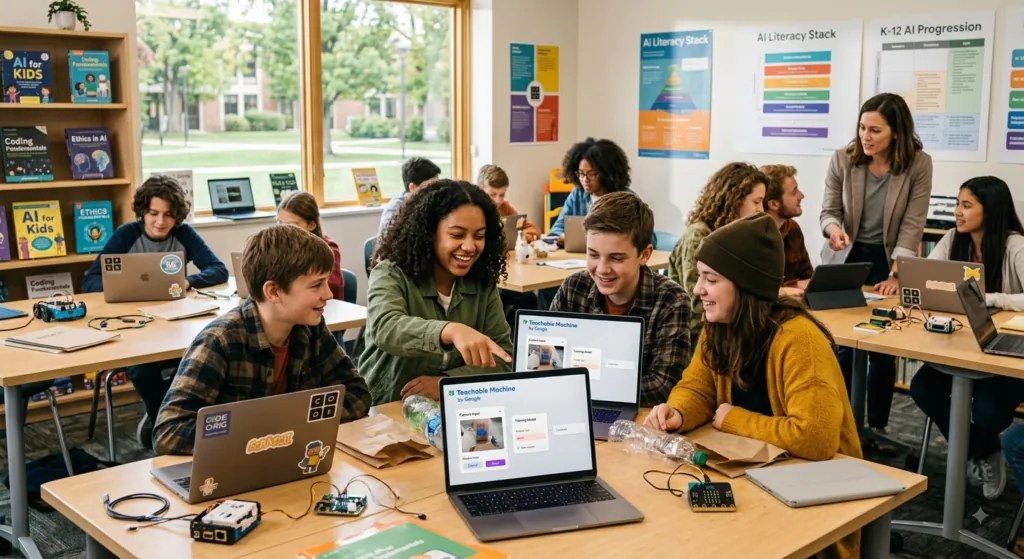
You do not need expensive computers or special software to teach AI. Some of the best learning happens with free tools that run right in a web browser.
No code
Train your own machine learning model using a webcam, a microphone or uploaded pictures, without writing a single line of code.

Block coding
Adds text recognition, image sensing and speech features to the much-loved Scratch block coding platform.

Self-paced
Fun, self-paced lessons on machine learning ethics, training sets and basic algorithm logic.

AI tutor
A real example of conversational AI used as a tutor. It guides students through problem-solving steps instead of just giving the answer.

Scratch + Python
Hands-on practice training ML models and then using them inside Scratch or Python projects.
Teachable Machine is a great first tool at home: your child can train a model to recognise their own hand signs in minutes.
Bringing AI into classrooms needs clear rules, good guardrails and a proper plan. Here is a simple four-step roadmap for schools.
Data privacy comes first. Schools should never use tools that collect personally identifiable information (PII, details like a name, photo or address that can identify a child) from minors, or that use student inputs to train public AI models. Instead, choose privacy-compliant education versions that promise data isolation and zero logging for model training.
Teachers matter just as much. AI training for students fails if teachers lack confidence. Schools should offer regular, structured training on how the tools work, how to teach with them, prompt engineering and how to protect academic honesty.
Finally, AI should not live only in the computer lab. It works best when it is woven into every subject.
Explore how algorithms shape public opinion and propaganda, and how media is created and changed.
Study how machines write text, judge its tone and edit AI drafts for style and accuracy.

Try generative art, visual prompting and style transfer, and talk about copyright ethics.

Learn the statistics, vectors, matrices and probability that power machine learning models.
1
Follow data protection laws such as COPPA and FERPA (US laws on children's and student data) and GDPR (Europe's data protection law).
2
Run hands-on seminars that show teachers how to teach with AI confidently.
3
Bring AI into maths, science, history and art, not just computer class.
4
Run sessions on bias, ethics and digital forensics so students keep questioning what AI tells them.
Before your child uses any AI app, check whether it stores what they type and whether it is meant for students.
Telangana is taking AI literacy seriously too. The Telangana School Education Department has launched an AI literacy programme for about 2 million government school students in Classes 5–9, working with Amazon Future Engineer and Pi Jam Foundation.
For families who want structured, hands-on learning outside school, AI Kids offers AI and Robotics classes for children aged 6 to 16 in Hyderabad. Sessions are interactive, project-based and led by experienced mentors who give clear, age-appropriate guidance.
The AI course has 8 modules that match the school journey described above:
Basics of AI
Introduction to Machine Learning
Image and Pattern Recognition
Natural Language Processing (NLP)
AI Tools and Platforms
Ethics and Safe Use of AI
Hands-on Coding with Scratch
Fun Challenges and AI Labs
AI and Robotics learning for children from primary school to high school.

Join online, or visit the JNTU Branch: Metro Pillar No: A689, 3rd Floor, Dr Atmaram Estates, Hyder Nagar, Vasantha Nagar, Hyderabad 500072.
Weekday and weekend slots are available to fit around school timetables.

Live classes with one-to-one mentorship support so no child gets left behind.
The AI course uses Scratch, Teachable Machine and Google AI Kit. The Robotics course uses Arduino, Scratch, robotics kits and sensors.
Not sure if your child is ready? Book a free demo class and let them try AI for themselves.
FAQs
Q1
A
Children can start learning basic AI ideas in primary school, at around ages 7–8 (Grade 3). At this stage, learning is unplugged and play-based, focusing on patterns, simple logic and basic online safety.
Q2
A
Proper AI training actually discourages cheating because it focuses on the process, not just the final answer. When students learn how AI builds answers, spot hallucinations and understand its limits, they use AI as a tutor rather than a crutch.
Q3
A
No. AI education covers concepts, ethics, practical use such as prompting and no-code tools, and technical engineering. Students can become AI literate without writing complex code.
Q4
A
Traditional CS is about writing exact rules for a computer to follow, such as 'If X, then Y'. AI training is about data-driven models, where machines find patterns in data to make predictions and decisions on their own.
Q5
A
Key topics are algorithmic bias (unfair data leading to unfair results), deepfakes and misinformation, data privacy (how personal information is tracked) and the environmental impact of the energy used to train large AI models.
Q6
A
Good free, browser-based options include Teachable Machine by Google, Scratch AI extensions, Code.org AI lessons, Khan Academy's Khanmigo and Machine Learning for Kids. Teachable Machine lets children train a model without writing any code.
Q7
A
Yes. CBSE is rolling out a Computational Thinking & AI curriculum for Classes 3–8 from the 2026–27 session.
Q8
A
Choose tools that do not collect your child's personal details and do not use their inputs to train public AI models. Teach your child never to share personal information with smart assistants or chatbots.
AI training for school students is not about turning every child into a machine learning engineer. It is about raising confident, thoughtful and ethical digital citizens who know how AI works and when to question it.
When age-appropriate lessons are combined with strong data privacy and clear ethics, children learn to use AI effectively, safely and creatively. Whether your child starts with an unplugged game, a Teachable Machine project or a structured course, the best time to begin is now.
Checked 25 September 2026.
R
Author
Rupendra · AI Kids
Empowering young minds in Hyderabad to explore Artificial Intelligence through fun, hands-on learning.

Trial Class
Available on Request

Mode
Online & Offline (Hyderabad)

Age Group
6 to 16 years
Blog
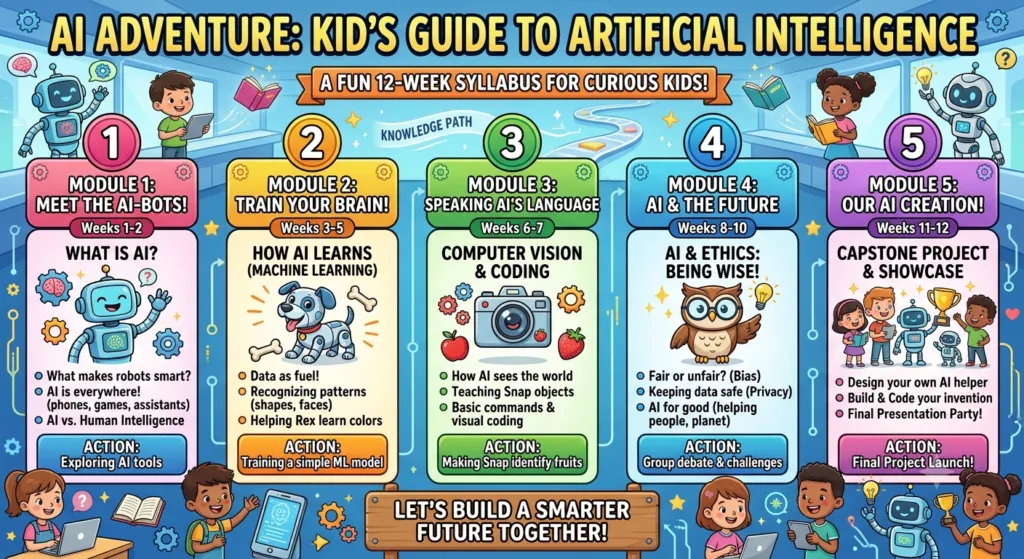
AI is already part of your child's day, from voice assistants and video recommendations to smart cameras. So what should kids actually learn about it? This AI course syllabus for kids breaks it down into simple modules, age-wise topics, fun projects and clear learning outcomes that parents and educators can use as a guide.
19 August 2026 · 13 min read
Read article

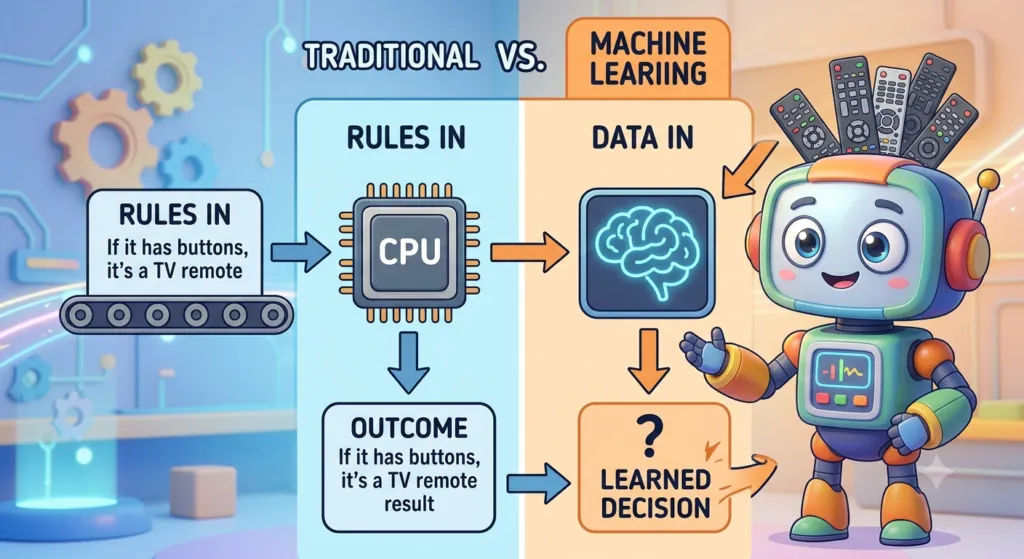
Python AI projects for kids turn coding into something children can see, hear and play with. Instead of only reading about Artificial Intelligence, young learners build small programs that answer questions, recognise pictures, play games and make decisions. Along the way they practise coding, logic, maths and problem-solving, one fun project at a time.
31 July 2026 · 12 min read
Read article
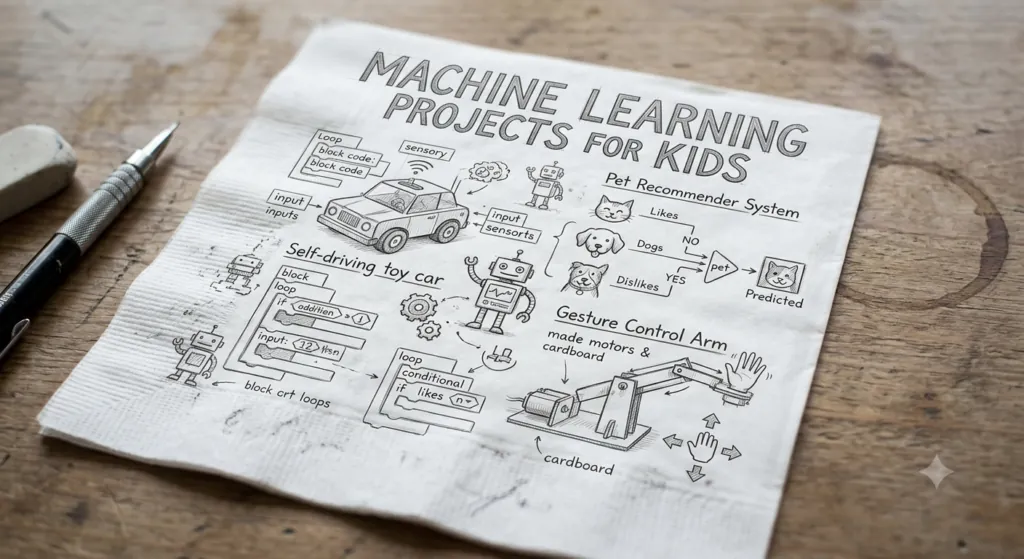
Machine learning projects for kids are a fun way to discover how computers spot patterns and make predictions. Machine learning is no longer only for university labs or software companies. Today, children can explore it through games, visual experiments, coding, robotics and creative projects, without starting with hard maths or complicated algorithms.
10 August 2026 · 15 min read
Read article
